
Custom software development, built by senior engineers
— Short answer
Custom software is a system written around your business rules where an off-the-shelf product does not fit: internal systems and panels, customer and partner portals, integrations. We build it with senior engineers only, and you talk directly to the team writing the code. Scope, timeline and cost are in writing before work starts. If a ready-made product does the job, we will say so; the first step is a conversation about your business.
Custom software or off-the-shelf: when each one is right
Custom software is not the answer to every problem. Often an off-the-shelf product does the job and is the right choice. These six questions show which side of the line you are on.
| Question | Off-the-shelf may be enough | Custom software may make sense |
|---|---|---|
| Is your business logic unique? | Your process looks like the common workflow in your industry | The logic is part of your edge, or something ready-made tools cannot model |
| Is a packaged product forcing compromises? | A few small compromises and things run fine | The compromises have piled up; spreadsheets, manual steps and add-ons are holding the work together |
| Does it need to connect to other systems? | A few systems, and standard connectors cover them | Several systems and data flows specific to you |
| What do users and roles look like? | A small number of similar user roles | Customers, partners and staff with different permissions and record-level access rules |
| Does it matter where the data lives? | It is fine for data to sit on the vendor's servers | Where data lives, who can see it and how it is deleted must stay under your control |
| What cost horizon are you looking at? | Short term; a low starting cost matters most | Long term; per-user fees keep growing and flexibility is worth paying for |
If an off-the-shelf product already does the job, we will tell you so. As we say on our home page, the first conversation is a real conversation, not a form: we are honest about whether it is the right time and the right fit.
What we build
The clearest way to explain what we mean by custom software development is through systems in our portfolio. Client names stay out because of NDAs and screenshots are shown without branding, but the engineering is real.
- Internal systems and operations dashboards. The Fleet and Logistics Tracking platform puts every vehicle, route and shipment on one live map, so nobody has to call a driver to ask where they are. The Pre-Accounting and Invoicing platform brings invoices, expenses and cash flow into one report instead of three tables that never agree.
- Customer and partner portals, trading networks. The B2B / C2C E-Commerce platforms combine tiered pricing, quote approval and buyer-seller matching.
- Matching and marketplaces. The Talent Matching platform scores and ranks candidates against open roles, so hiring starts from a ready shortlist rather than a pile of résumés.
- Booking and payment flows. The Booking and Reservation platform accepts the first request when two people reach for the same slot and gives the second an honest "already taken".
- Real-time data and IoT systems. The Energy Monitoring platform shows power draw zone by zone in real time. We wrote up the hard parts in our engineering notes: custom energy meters from bare PCB to analytics and a low-latency live market-data engine, both with the reasoning behind each decision.
This is a selection, not the full list; if your project looks like none of these, we can still talk.
Technology follows the product. Across our portfolio we mostly used Node.js and PostgreSQL for business systems, React and Next.js for interfaces, MQTT and WebSocket for real-time device data and Stripe for payments, with Elasticsearch where ranking and search matter and InfluxDB for time-series data. Because we write down the reasoning behind every technical decision, you can always ask why a technology was chosen.
Why custom software projects go wrong
Stories of custom software projects that end badly look alike. Usually one of three things happens:
- The scope lives in conversation. Everyone hears the same sentence and imagines a different product; the gap shows up at the first demo. Our answer is to write down the scope, timeline and cost before any work starts.
- A layer gets in between. An account manager or a translator sits between what the business owner says and what the developer hears. With us you talk directly to the engineer writing your code.
- Nobody owns the system after launch. The system is delivered and maintenance becomes nobody's job. We give a full year of direct support after launch and keep track of what your system depends on.
These are not grand promises; they are the working principles we publish on our site.
How we work
Every project goes through the same four steps from the first conversation to delivery; the Process page has the details. In custom software the first two steps matter most, because a misunderstood business rule is the most expensive mistake.
- Discovery. We talk until both sides describe the same thing: who does the work today, with which tools, in what order, and what a good result looks like. Nothing gets built before that picture is shared.
- A scoped proposal. What is being built, in what order and what it costs, written down. You approve it before work starts, so the plan you agreed to is the plan we work to.
- Building, visibly. Once we start building, a live project panel opens in your account with status, offers, payments and a direct line to us. You see real progress from week one.
- Review and handoff. You review what we have built, we refine it, and then we hand it over.
What to bring to the first conversation
You do not need to prepare; the first conversation is a real conversation, not a form. If you have thought about these five things, it moves faster:
- Today's process. Who does the work now and with which tools? Where do time and mistakes pile up?
- Users and roles. Who will use the system and who should be able to see what?
- Systems to connect. Which existing software, spreadsheets or services will it exchange data with?
- A success measure. What would make you say a year from now that it worked?
- Constraints. Regulation on the data, internal rules or deadline pressure.
What drives the price
We do not publish figures here, because a number given before the scope is clear is only an estimate. The written proposal contains scope, timeline and cost together, and the price does not move afterwards. Below is what drives the price and the question that settles each item.
| Item | How it affects the price | The question that settles it |
|---|---|---|
| Discovery and analysis | The more uncertainty, the wider the estimate | Who does this today and how? What has to change? |
| Design | Number of screens and flows, variety of user groups | Who will use it and what will they do most often? |
| Development | Number of features and complexity of business rules | Which rules have exceptions and where does the process branch? |
| Testing | The higher the cost of a bug, the broader the verification | If something goes wrong, who pays and how much? |
| Infrastructure | Hosting, domains, storage, the deployment pipeline | Do you have your own cloud account or should we set one up? |
| Integration | The number of systems and the quality of their interfaces | Which systems, in which direction, how often? |
| Maintenance | The level of support you expect after launch | How many people will use it daily, and how much downtime is acceptable? |
What is binding is the written agreement signed for your engagement; this page does not replace a proposal.
Source code, infrastructure and handover
Once the project is paid in full, the delivered work is yours. What we had before your project, such as our own tools, libraries and frameworks, stays ours; the provision is written on the Terms page.
Custom software usually runs on a server, and who holds that server matters. Unless you would rather handle it yourself, we provision and manage hosting, domains, storage and the deployment pipeline around them, so you get a production-ready system without having to become an infrastructure expert. If your organization needs everything under its own roof, we deploy to your cloud accounts instead; we lay out the trade-offs either way and then work with whichever you choose.
API keys, server access and third-party accounts that you share for infrastructure work are stored encrypted and used only for your project. When the work is done you are free to rotate or revoke them. If you ever want to bring the infrastructure in-house or move it to another team, we help you transfer it cleanly, with accounts, domains and documentation. Nothing we run for you is a reason you cannot leave.
After delivery
Once you are live, we give a full year of direct support; we do not hand over and disappear. Beyond that, for new features, monitoring, updates and someone to call, we set up an arrangement sized to the project. A brochure site and a system with daily users do not need the same thing, so we do not sell them the same plan.
Platforms move: dependencies get deprecated, APIs change, security advisories land. On the projects we look after, we keep an eye on what yours depends on and raise what needs attention rather than letting it quietly rot. Anything that comes up after launch goes to one place, your project panel or a message straight to the people who built it.
Who we are not a fit for
Custom software is not the right choice for everyone, and we are not the right team for every project.
- You are looking for a packaged website. Template and package-priced site setups are not what we do; a ready-made product or package will be a better and cheaper fit.
- You only want a design deliverable. Our team produces working software; we design the screens as part of the work, but we do not sell visual design on its own.
- Your only criterion is the lowest price. Weighing an engagement with a written scope, a price that does not move afterwards and senior engineers against a price-led quote on one scale misleads both of us.
Frequently asked questions
How long does custom software take?
It depends on the scope. Four things set the duration: the size of the scope, the number of systems to connect, how much uncertainty there is, and how quickly decisions get made on your side. We do not quote durations on this page; the timeline appears in the written proposal, together with scope and cost, before work starts.
How is the price of custom software decided?
By the items in the table above, from discovery to maintenance, and by how much uncertainty each of them carries. Once the scope is approved in writing, the price does not change. A figure is given in the proposal, after the scope is clear.
Do I own the source code?
The delivered work becomes yours once the project is paid in full. Our own tools, libraries and frameworks that existed before your project stay with us. What is binding is the signed written agreement.
Do you take over a project another company left unfinished?
Yes, you can come with an idea, a need or a half-finished project; as we say on our home page, we start where it makes sense for you. We talk through what you have and put where to continue from into a written proposal. The method and the duration depend on the state of what you have and are set out in the proposal.
What happens after launch?
We give a full year of direct support. Support beyond that, such as new features, monitoring and updates, is set up as a separate arrangement sized to the project. Anything that comes up after launch goes to your project panel or straight to the engineers who built it.
Do you work with clients outside of Turkey, or from other cities?
We work with clients in Turkey and abroad. Conversations, progress tracking and communication run through the live project panel and direct messaging, so you do not need to be in the same city.
Selected work
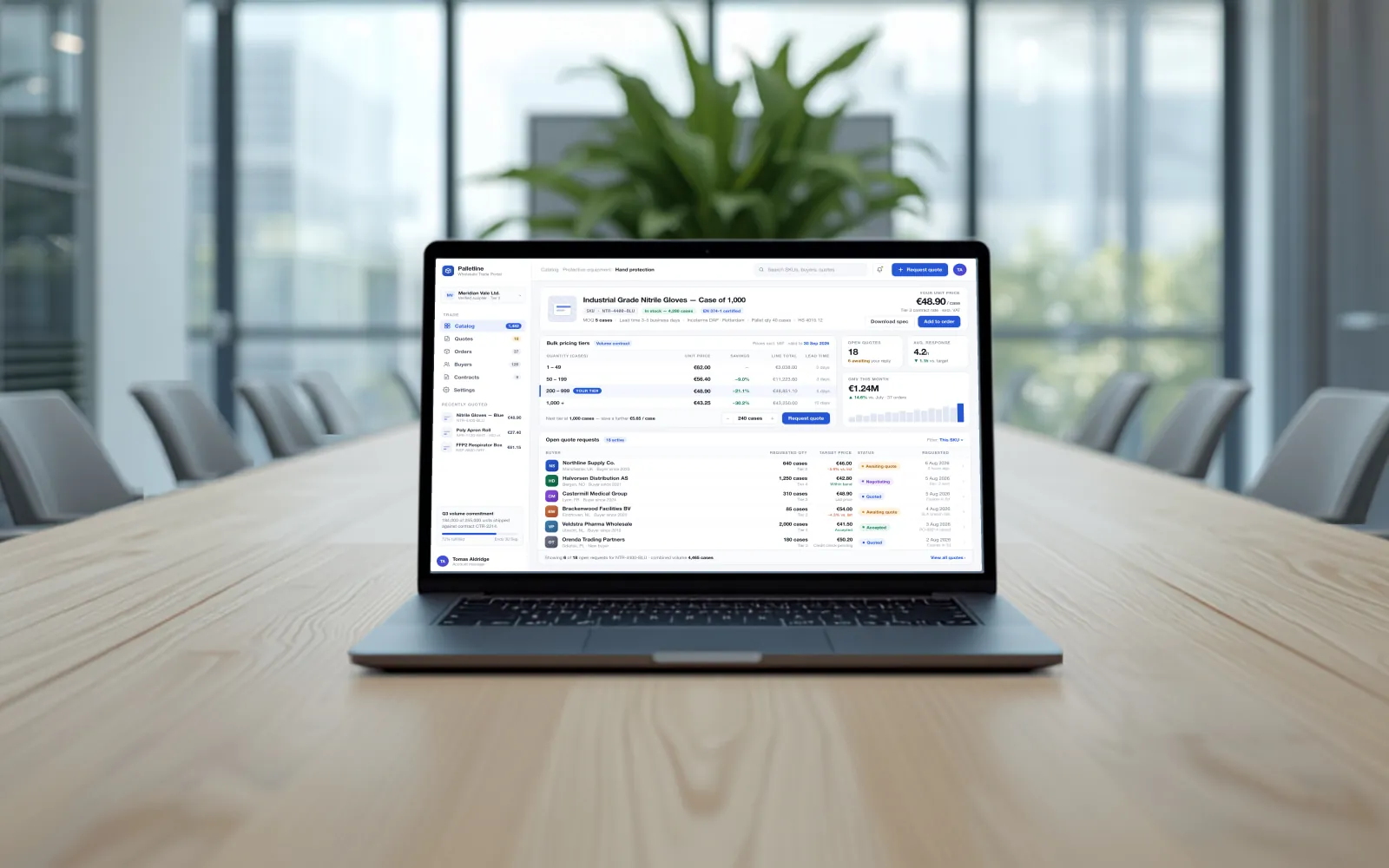
B2B / C2C E-Commerce Platforms
Between businesses, price is negotiated: tiered pricing, bulk orders and quote requests are a different problem from a consumer storefront.
View case study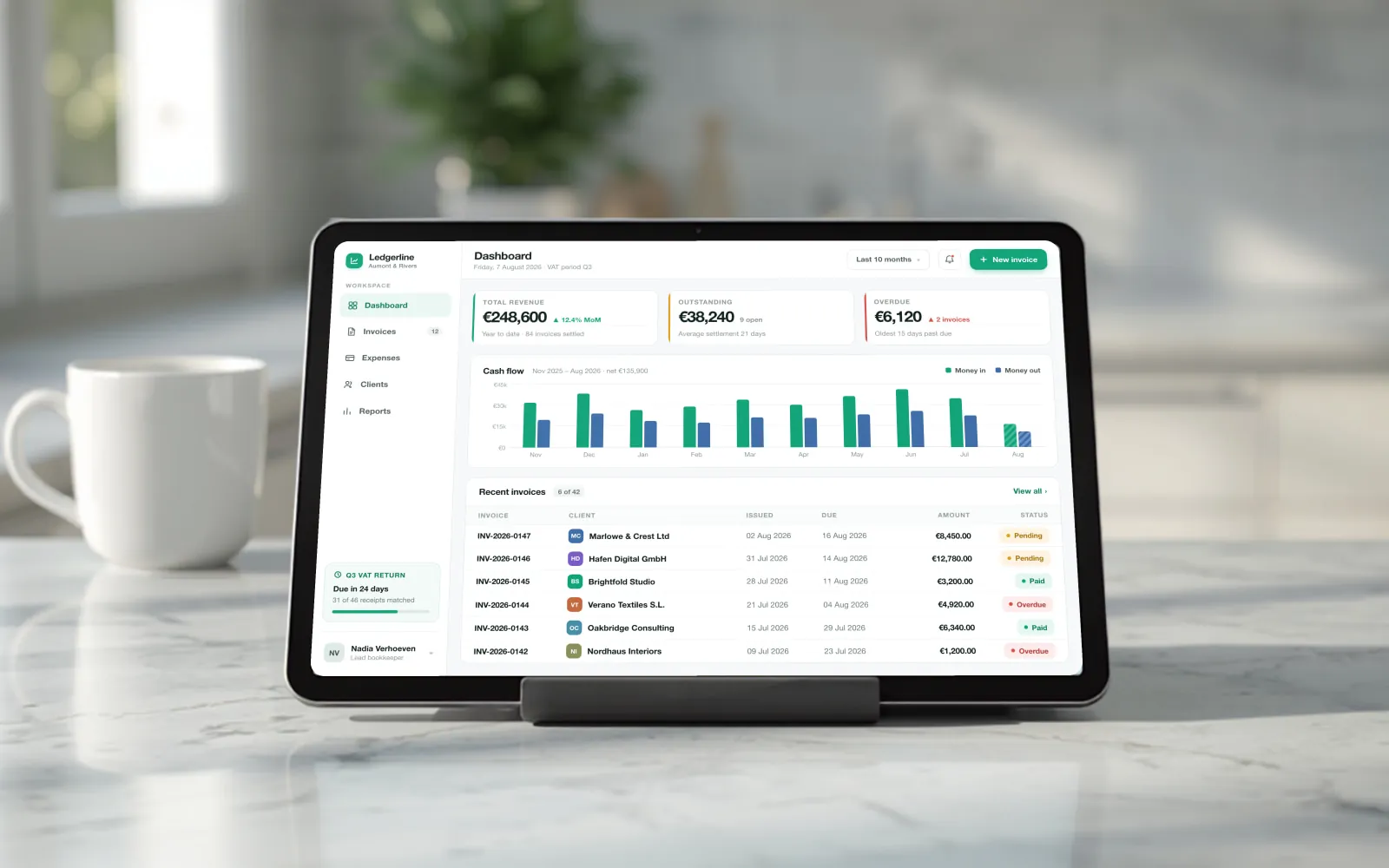
Pre-Accounting & Invoicing Platform
Invoices, expenses and cash flow in one report; status changes not because someone remembered to update it, but when payment actually happens, through Stripe webhooks queued via Redis.
View case study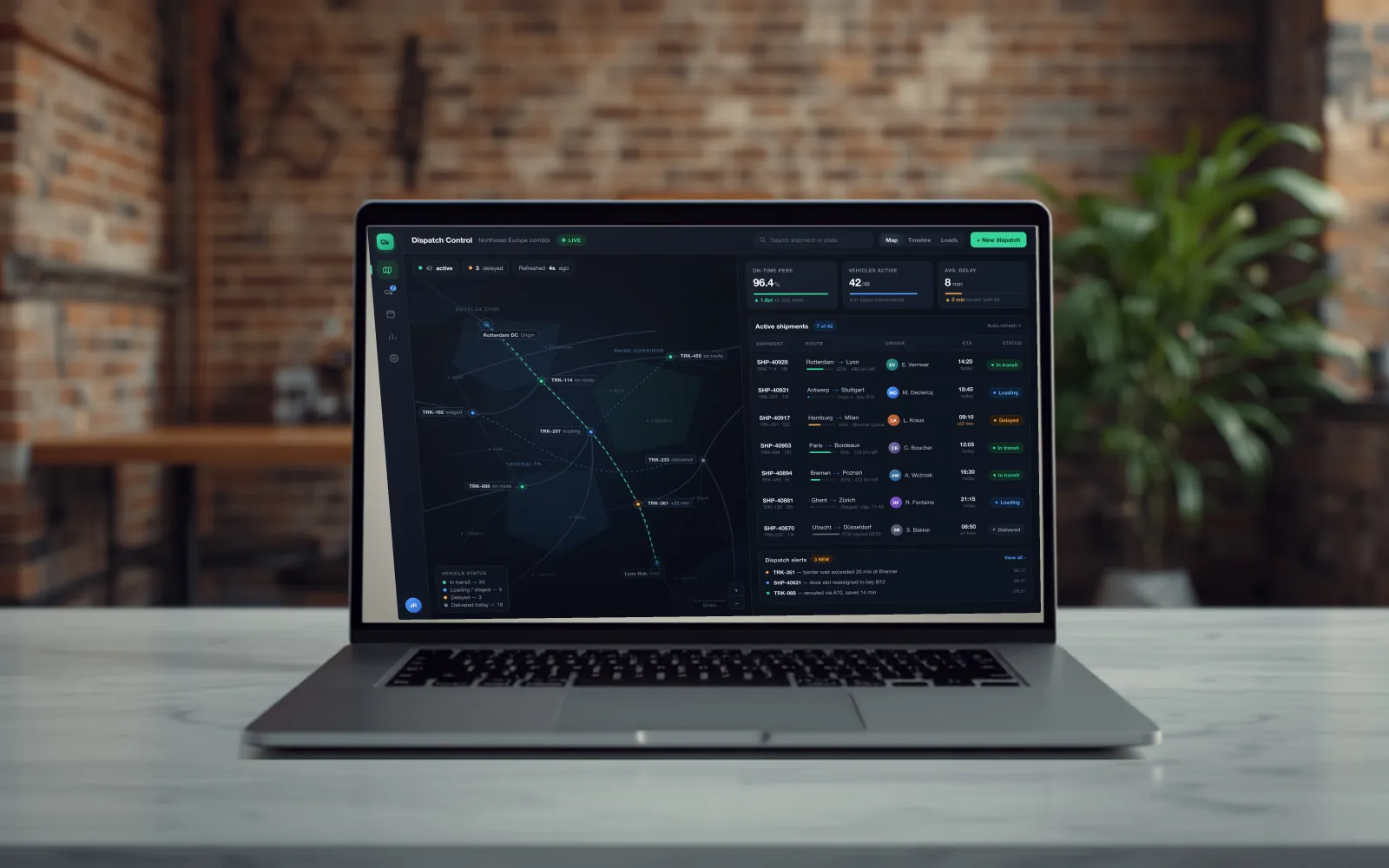
Fleet & Logistics Tracking
Every vehicle on a live map; redrawing dozens of vehicles on every move would lock up a browser tab, so updates stream over MQTT and are processed in batches.
View case studyRelated services
Engineering notes
Let's pin down your project
Tell us what you want to build. We put scope, timeline and cost in writing before any work starts.
Last updated: